For manufacturers of pumps, valves, power generation equipment, and critical industrial components, traditional casting patterns can add significant costs and delays. Patternless molding offers a faster, more flexible alternative—particularly for complex, low-volume castings.
When engineers and purchasing professionals need a metal casting, one of the first questions is often: How quickly can we get it, and what will it cost?
For many traditional sand castings, the answer depends heavily on the time and expense required to manufacture a pattern—the physical tooling used to create the mold cavity into which molten metal is poured.
Patterns are essential to conventional sand casting, but they can also represent a substantial upfront investment, particularly when only one or a handful of castings are needed.
What if the mold could be produced directly from a digital design, without first manufacturing a traditional pattern?
That’s the advantage of patternless molding, an advanced manufacturing approach that is changing how foundries produce specialty metal castings.
At Effort Foundry, patternless casting capabilities help customers reduce tooling expenses, shorten production lead times, and manufacture complex components that might otherwise be difficult or costly to produce.
For companies sourcing replacement impellers, valve bodies, specialty pump components, or critical castings for power generation and military applications, this technology offers significant practical benefits.
What Is a Patternless Mold?
A patternless mold is a casting mold produced without the need for a conventional, reusable physical pattern.
In traditional sand casting, a pattern—typically made from wood, metal, plastic, or another material—is used to form a cavity in compacted or chemically bonded sand. Once the pattern is removed, molten metal is poured into the resulting cavity to create the casting.
For complex castings, separate core boxes may also be required to manufacture the sand cores that form internal passages and cavities.
Producing this tooling can require substantial engineering, machining, labor, and time.
Patternless molding eliminates the need for some or all of this traditional tooling by using digital design and advanced manufacturing technologies.
One of the most effective methods is 3D sand printing, in which a mold and its cores are manufactured directly from a computer-generated model.
Instead of creating a permanent pattern first, the foundry uses digital information to produce the sand mold itself.
The result is a casting process that can be particularly advantageous for one-time orders, prototypes, replacement components, and low-volume production.
How Are Patternless Molds Made?
The process begins with a digital model of the casting. From there, foundry engineers use specialized software and manufacturing technology to turn the design into a mold ready for molten metal.
Step 1: Creating the digital casting model
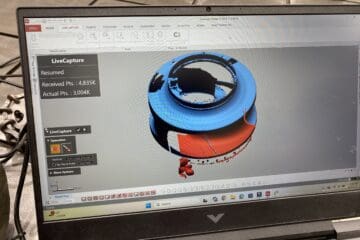
Engineers begin with a 3D CAD model supplied by the customer or developed from existing drawings or components. They evaluate the casting geometry, material requirements, machining allowances, and other manufacturing considerations.
Step 2: Engineering the mold
The digital model is converted into a mold design. Engineers incorporate gating systems, risers, cores, and other features needed to support proper metal flow, solidification, and casting quality.
Step 3: Printing the mold and cores
A specialized 3D sand printer deposits layers of foundry aggregate. A printhead selectively applies a binding agent to bond the material into the required shape. The process repeats layer by layer until the mold sections or cores are complete.
Step 4: Preparing the mold for casting
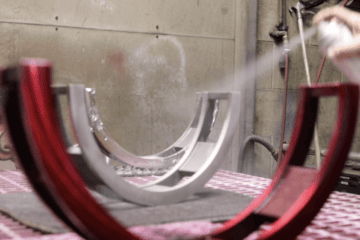
Loose material is removed, and the printed mold sections and cores are cleaned, inspected, and assembled. Appropriate coatings or other preparations may be applied before pouring.
Step 5: Pouring, finishing, and inspection
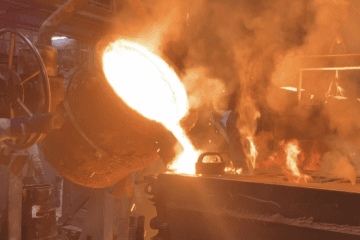
Molten metal is poured into the prepared mold. After solidification and cooling, the casting is removed, cleaned, finished, and subjected to the required inspections and testing.
The result is a metal casting produced using a digitally manufactured mold, without requiring a conventional reusable pattern or core box.
The technology also provides engineers with greater flexibility to create complex internal passages and geometries that can be difficult to manufacture using traditional tooling.
Springer Nature Link+1
When Should Manufacturers Consider Patternless Molding?
Patternless molding is not necessarily the most economical solution for every casting project. Traditional patterns often remain the best choice for established designs produced repeatedly in larger quantities.
However, several situations make patternless manufacturing particularly attractive.
1. One-time replacement castings
Consider a power generation facility operating a pump or valve that has been in service for decades.
The original equipment manufacturer may no longer produce the component, and the original pattern may have been lost, damaged, or discarded.
Manufacturing a permanent pattern for a single replacement casting could add substantial cost and delay.
Patternless molding allows the foundry to work from existing engineering drawings, a digital model, or dimensional information obtained from the original component.
This can help facilities obtain difficult-to-source replacement parts without investing in tooling that may never be used again.
2. Prototypes and engineering development
Manufacturers developing new pump, valve, or industrial equipment designs often need prototype castings before committing to production tooling.
With traditional casting methods, each significant design revision may require pattern modifications or entirely new tooling.
Patternless molding allows engineers to update the digital design and produce revised molds without rebuilding a permanent pattern.
This flexibility is particularly valuable during product development, testing, and design validation.
3. Complex internal geometries
Many industrial components feature intricate internal passages, curved channels, or other geometries that are difficult to reproduce using conventional patterns and core boxes.
Shrouded impellers, for example, may require complex internal flow passages that demand sophisticated core-making techniques.
3D-printed molds and cores can expand design possibilities by reducing some of the tooling constraints associated with conventional manufacturing.
For engineers, this can create opportunities to optimize component geometry for performance rather than designing exclusively around traditional tooling limitations.
4. Small production runs
Not every manufacturer needs hundreds or thousands of identical castings.
Some customers require only two or three specialty components, while others may need a limited number of castings annually.
For these applications, permanent tooling costs can represent a disproportionate share of the total project expense.
Patternless molding can reduce that upfront investment, making small production quantities more economically practical.
5. Emergency replacement and maintenance projects
In power generation, chemical processing, and other industrial facilities, an unexpected equipment failure can create an urgent need for a replacement casting.
Traditional tooling lead times may be incompatible with a plant’s maintenance schedule.
When a suitable digital model is available and manufacturing capacity permits, patternless molding can shorten the time required to begin casting production.
For facilities facing costly downtime, even a modest reduction in lead time can provide significant economic value.
The Financial Value: Lower Tooling Costs and Faster Turnaround
The most obvious benefit of patternless molding is the potential elimination of conventional pattern and core-box costs.
But the financial advantages extend beyond the initial tooling expense.
| Traditional pattern casting | Patternless mold casting |
| Requires investment in reusable patterns | Can eliminate permanent pattern tooling |
| Tooling fabrication adds lead time | Digital mold production can shorten lead time |
| Design changes may require tooling modifications | Design changes can be made digitally |
| Tooling investment is spread across production quantities | Particularly attractive for one-offs and small batches |
| Well suited to repeat production | Well suited to prototypes, replacements, and complex low-volume projects |
For example, imagine a manufacturer needs a single specialty valve body.
If traditional patternmaking requires a substantial upfront investment, the tooling expense must be absorbed by that one casting.
With a digitally printed mold, the manufacturer may avoid much of that permanent tooling expense.
The savings can be significant, especially when combined with shorter development timelines and reduced costs associated with engineering changes.
Effort Foundry has previously reported that its rapid prototyping approach can reduce certain projects’ lead times from approximately eight to ten weeks to two to three weeks, while eliminating traditional pattern costs. Actual savings and schedules depend on the specific casting, design, alloy, and manufacturing requirements.
Effort Foundry Quality Castings+1
For customers, the objective isn’t simply to produce a less expensive mold. It’s to reduce the total cost and time required to obtain a casting that meets their specifications.
The Effort Foundry Advantage: Multiple Paths to Patternless Casting
One of Effort Foundry’s distinguishing capabilities is its ability to evaluate multiple manufacturing approaches rather than forcing every casting into a single production method.
Effort combines traditional patternmaking expertise with digital engineering and advanced manufacturing technologies, including 3D printing and CNC-machined, single-use foam patterns.
This gives customers greater flexibility when balancing cost, lead time, geometry, and production quantity.
Directly printed molds and cores
Effort’s engineers can take a customer’s digital casting model, or develop one, and convert it into the information needed to manufacture sand molds and cores directly.
This approach eliminates the need for traditional patterns and core boxes.
Effort’s published capabilities include both in-house 3D printing resources and the use of specialized outside providers for certain directly printed sand molds and cores. This allows the company to select an appropriate manufacturing approach for the project.
Effort Foundry Quality Castings+2
Single-use foam patterns
Another option uses CNC machining to create a disposable foam pattern from a digital model.
Unlike directly printed sand molds, this method still uses a physical pattern—but eliminates the need to manufacture expensive, permanent tooling.
Effort has documented projects combining CNC-machined foam patterns with 3D-printed cores to produce complex steel castings.
In one example, the company manufactured a 1,515-pound ASTM A216 WCB steel casting using a single-use foam pattern and printed cores. The approach demonstrated how digital manufacturing and conventional sand casting can work together to produce a complex, low-volume component.
Effort Foundry Quality Castings
Customers can explore this process in Effort’s documented patternless casting project.
Why Patternless Molding Is Especially Valuable for Pumps, Valves, and Power Generation
Effort Foundry’s primary customer markets are particularly well suited to the advantages of patternless casting.
Industrial pump and valve manufacturers often need highly specialized components, including impellers, casings, valve bodies, and other castings designed for specific operating conditions.
Power generation facilities may need replacement components for equipment that has been operating for decades.
Military and nuclear applications may require small quantities of specialized castings with demanding material, testing, and documentation requirements.
In these markets, the challenge is frequently not mass production. It is obtaining a technically complex casting that meets exact specifications without excessive tooling costs or unnecessary delays.
Patternless molding can help address these challenges.
For example, a customer replacing an obsolete pump impeller may benefit from a digitally manufactured mold rather than paying to reproduce a permanent pattern.
A valve manufacturer developing a new product may use printed molds to evaluate design revisions before committing to production tooling.
And a power generation facility facing a maintenance outage may benefit from a shortened casting production schedule.
In each situation, the technology provides value by aligning the manufacturing method with the customer’s actual needs.
More Than Technology: The Importance of Foundry Expertise
Although 3D printing and digital modeling have transformed casting production, technology alone does not guarantee a successful casting.
Foundry engineering remains essential.
Engineers must still consider alloy selection, shrinkage allowances, metal flow, solidification behavior, core placement, dimensional requirements, and inspection specifications.
An improperly engineered mold can produce a defective casting regardless of how accurately it was printed.
This is where Effort Foundry’s experience becomes especially valuable.
Since 1973, Effort has manufactured specialty castings for customers requiring complex geometries, demanding alloys, and rigorous quality standards.
Its capabilities include:
- Casting expertise across more than 50 iron, steel, stainless steel, nickel-based, and other specialty alloys.
- Engineering and casting simulation capabilities using digital modeling technology.
- Traditional and advanced patternmaking methods.
- 3D-printed patterns, molds, and cores.
- Heat treatment, machining, and finishing capabilities.
- Extensive quality assurance, metallurgical testing, and nondestructive inspection.
Effort’s combination of engineering knowledge, manufacturing flexibility, and quality assurance helps customers move from concept to finished casting with fewer unnecessary manufacturing handoffs.
Its focus on low-volume, high-complexity production also means the company is accustomed to projects that may be unattractive to foundries designed primarily for high-volume manufacturing.
Choosing the Right Casting Process for Your Project
Patternless molding offers significant advantages, but the right manufacturing method depends on several factors.
Production quantity, casting size, geometry, alloy requirements, anticipated repeat orders, and delivery schedules all influence the decision.
For a component expected to be manufactured repeatedly over many years, investing in traditional tooling may provide the lowest long-term cost per casting.
For a single replacement part, prototype, or complex low-volume order, digitally manufactured molds or single-use foam patterns may offer a more economical solution.
Rather than assuming one process is always superior, Effort Foundry works with customers to evaluate their requirements and identify an appropriate manufacturing strategy.
The real advantage is having the engineering expertise and manufacturing flexibility to choose the process that best serves the customer’s needs.
Have a Complex Casting Project? Put Effort Foundry’s Patternless Capabilities to Work.
Whether you’re replacing an obsolete pump component, developing a new valve design, or sourcing a specialty casting for power generation, military, or nuclear applications, Effort Foundry can help you explore manufacturing options that reduce tooling costs, shorten lead times, and deliver the quality your application demands. With more than 50 years of foundry experience, advanced digital engineering, patternless casting capabilities, and comprehensive quality assurance, Effort specializes in solving the complex casting challenges other foundries may avoid. Have a casting project that could benefit from patternless molding? Contact the Effort Foundry sales team at 610-837-1837 or visit EffortFoundry.com to discuss your specifications and request a competitive quote today.