For critical applications in power generation, pumps, valves, nuclear facilities, and military equipment, what happens after the metal is poured can be just as important as the casting itself.
When engineers and purchasing professionals evaluate metal castings, they often focus on alloy selection, dimensional accuracy, and manufacturing quality. However, another essential step can significantly influence how a casting performs in service: heat treatment.
For industries where equipment must withstand high pressures, extreme temperatures, corrosive environments, and demanding operating conditions, proper heat treatment can mean the difference between a component that performs reliably for years and one that fails prematurely.
At Effort Foundry, heat treatment is an important part of producing high-quality specialty castings that meet customers’ exacting specifications.
What Is Heat Treatment of Metal Castings?
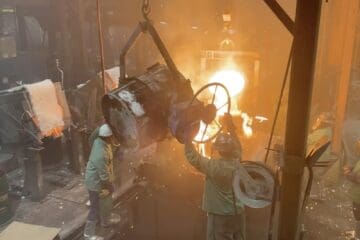
Heat treatment is a controlled process of heating and cooling metal to modify its internal structure and achieve specific mechanical properties and microstructures.
Although metal castings are produced at extremely high temperatures, the cooling process after pouring does not always produce the optimal combination of strength, hardness, toughness, and internal stability required for their intended applications.
Heat treatment allows foundries to modify these characteristics through carefully controlled temperature cycles, holding periods, and cooling methods.
Depending on the alloy and application, heat treatment may involve several processes:
-
- Normalizing: Heating and cooling steel under controlled conditions to refine its microstructure and improve uniformity and mechanical properties.
-
- Annealing: Heating and cooling metal to soften it, improve machinability, or relieve internal stresses.
-
- Quenching and tempering: Rapidly cooling certain alloys, followed by reheating, to achieve the desired balance of strength, hardness, and toughness.
-
- Stress relieving: Reducing residual stresses that can develop during casting, welding, or machining.
-
- Solution heat treatment: Heating certain stainless steels and specialty alloys to establish the required microstructure and corrosion-resistant properties, followed by appropriate cooling.
Not every casting requires the same treatment. The proper process depends on the alloy, engineering specifications, casting geometry, and intended service environment.
Why Is Heat Treatment Important?
Heat treatment is not simply an additional manufacturing step. For many industrial applications, it is essential to achieving the material properties specified by engineers.
1. Improved strength and durability
Pump housings, valve bodies, impellers, and power generation components frequently operate under substantial mechanical stress. Proper heat treatment can help develop the tensile strength and yield strength needed to withstand these demanding conditions.
2. Greater toughness and resistance to cracking
A casting must often resist both sustained loading and sudden mechanical stresses. Depending on the alloy and treatment, heat treatment can improve toughness and help reduce susceptibility to brittle failure.
3. Improved dimensional stability
The casting and cooling processes can create residual stresses within metal components. These stresses may contribute to distortion during machining or subsequent service. Appropriate stress-relief treatments can help improve dimensional stability, particularly for complex castings requiring precision machining.
4. Better performance in challenging environments
Many specialty alloys are selected for resistance to heat, corrosion, and demanding operating conditions. Proper heat treatment helps establish the microstructure necessary to achieve the specified properties. This is especially important for certain stainless steels, duplex alloys, and other specialty materials.
5. Compliance with engineering specifications
In nuclear, military, and other highly regulated applications, customers may require castings to meet specific ASTM, ASME, military, or proprietary material standards. Heat treatment is often an essential part of satisfying those requirements, supported by appropriate testing and documentation.
Why Heat Treatment Matters to Pump, Valve, and Power Generation Manufacturers
Consider a large industrial valve body operating under high pressure. The component must maintain structural integrity through repeated operating cycles while resisting the mechanical and environmental conditions associated with its application.
Similarly, a shrouded impeller used in a power generation or industrial pumping system may experience substantial rotational forces, vibration, and exposure to demanding process fluids.
For these applications, selecting the correct alloy is only the beginning.
The casting must also possess the mechanical properties and microstructure necessary for reliable operation. Improper heat treatment can result in inadequate strength, excessive hardness, reduced toughness, or unacceptable material characteristics.
For OEMs, maintenance organizations, and aftermarket suppliers, these problems can translate into rejected components, production delays, expensive rework, or equipment downtime.
Proper heat treatment helps protect not only the integrity of the casting but also the reliability of the equipment in which it operates.
The Effort Foundry Advantage: In-House Heat Treatment and Metallurgical Expertise
Not every foundry possesses the equipment, expertise, or quality systems needed to manage complex heat treatment requirements.
Effort Foundry has invested in in-house heat treatment capabilities to provide customers with greater process control and a more integrated manufacturing experience.
Its equipment includes computer-controlled furnaces, calibrated temperature monitoring systems, and quenching capabilities. Its larger heat treatment furnace uses a nitrogen-enriched atmosphere to reduce oxidation and scale formation on applicable ferrous castings.
This controlled atmosphere helps produce cleaner casting surfaces, potentially reducing additional finishing work.
Effort’s heat treatment capabilities are particularly valuable for carbon steels, low-alloy steels, martensitic stainless steels, and other materials requiring specific thermal processing.
For castings that exceed its in-house capabilities or require specialized treatment, Effort also maintains relationships with approved outside heat treatment providers.
The result is greater flexibility for customers sourcing specialized, low-volume castings.
Quality Assurance: Verifying the Results
Heat treatment alone does not guarantee that a casting meets its specifications. The results must be verified through appropriate inspection and testing.
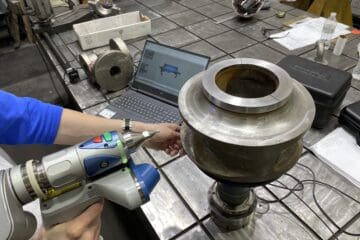
Effort Foundry combines heat treatment with extensive quality assurance and laboratory capabilities, including tensile testing, hardness testing, chemical analysis, and nondestructive inspection.
For customers purchasing castings for critical applications, these capabilities provide an important advantage: greater confidence that material properties have been evaluated against the applicable requirements.
ISO 9001 certified since 2006, Effort Foundry also has extensive experience serving customers with military, nuclear, ASME, and other demanding quality requirements.
More Than a Foundry: A Partner for Complex, Low-Volume Castings
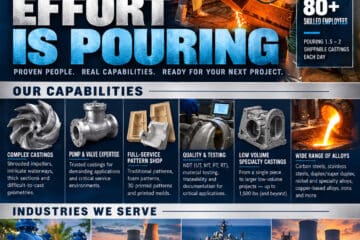
One of Effort Foundry’s distinguishing strengths is its ability to manufacture complex specialty castings in small quantities.
While many foundries concentrate on high-volume production, Effort specializes in challenging, low-volume projects, including single-piece orders, replacement components, prototypes, and specialty alloy castings.
Its integrated capabilities extend beyond pouring metal to include engineering support, traditional and advanced patternmaking, heat treatment, machining, inspection, and testing.
For customers, this means fewer manufacturing handoffs, better coordination, and a knowledgeable team capable of addressing technical requirements throughout the casting process.
Whether the project involves a replacement valve body for a power plant, a complex impeller, or a specialty component for a military or nuclear application, Effort brings decades of experience to the challenge.
Put Experience and Precision to Work for Your Next Casting Project
Heat treatment is one of the many factors that distinguish an ordinary casting from a component engineered for demanding service. At Effort Foundry, we understand that our customers aren’t simply purchasing metal castings—they’re depending on components that must perform reliably when it matters most. With more than 50 years of foundry experience, specialized alloy expertise, in-house heat treatment, and comprehensive quality assurance capabilities, Effort is equipped to tackle your most challenging casting requirements. Have a project that demands precision, strength, and dependable performance? Visit our capabilities page or contact the Effort Foundry sales team at 610-837-1837 to discuss your specifications and request a quote. From one casting to a specialized production run, we’re ready to put our experience to work for you.